A GRENETS-MAYSE | A BORDER-STORY
Two-channel Video
2026
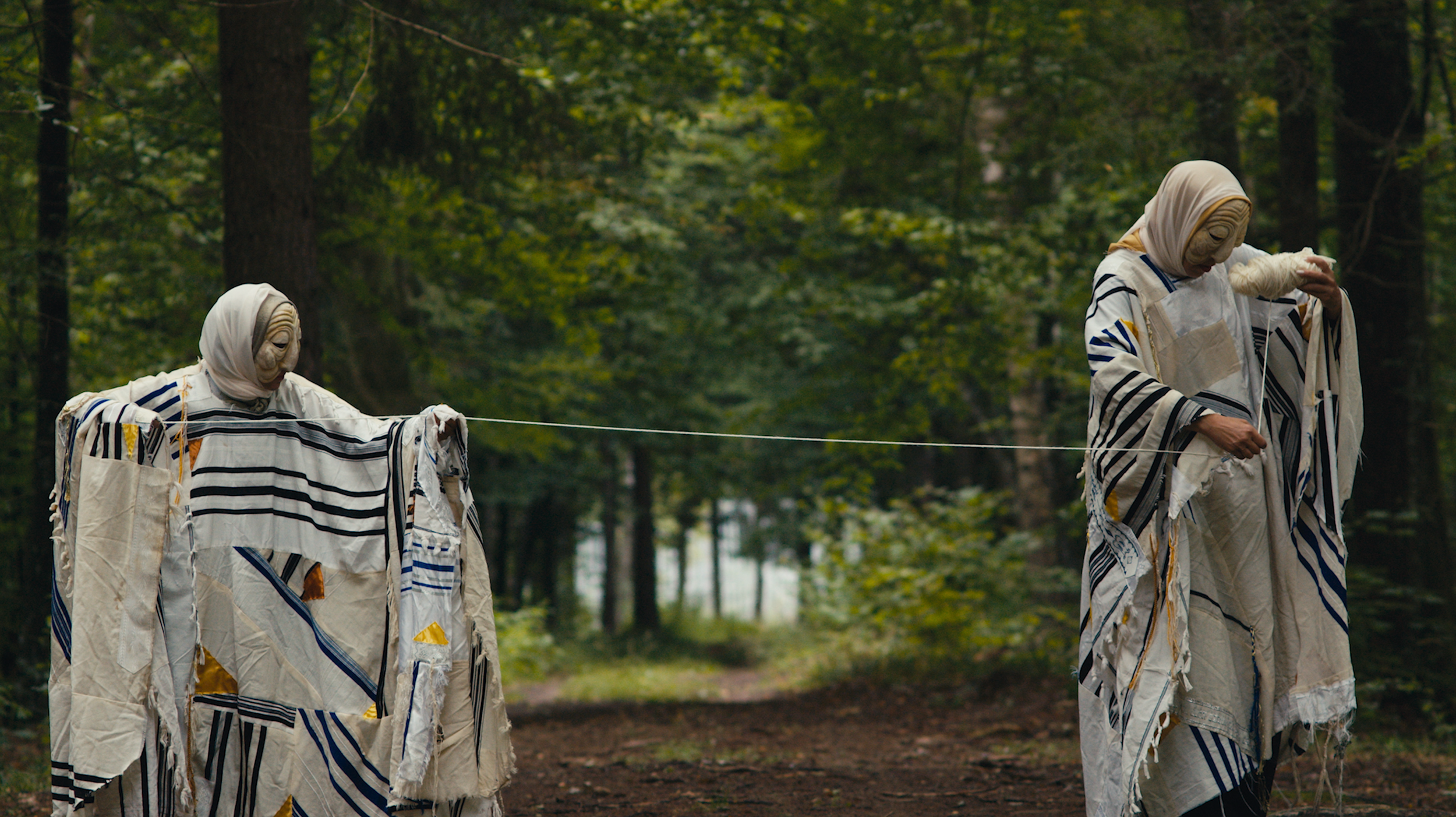
Hereland Collective, A Grenets-Mayse | A Border-Story, film still, 2026
A Grenets-Mayse | A Border-Story is a two-channel video installation that explores the ecological and human harm caused by nationalism. Weitz, alongside her collaborators from Hereland Collective, revive Ashkenazi folk healing practices from the Pale of Settlement to contend with the polarization and division caused by national borders, conjuring the spiritual technologies of their ancestors to oppose violence.
The story is set in the Białowieża Forest, Europe’s most biologically diverse old-growth forest, violently ruptured by a militarized border wall stretching hundreds of kilometres. In recent years, dozens of people have died or gone missing while attempting to cross the Polish-Belarusian border in search of safety and a better life, adding another layer to the sedimented histories of violence, erasure, and regeneration that shape this region.
The artwork pries open these layers, turning to the intuition and wisdom of traditional Jewish women folk healers known in Yiddish as feldmesterin and opshprekherin. These women once roamed the shtetls, cemeteries, and forests of these lands, attending to the dead, the forgotten, and the ailing. The artwork asks: How might recovering lost diasporic practices repair ruptures of the present, and prevent future harm?
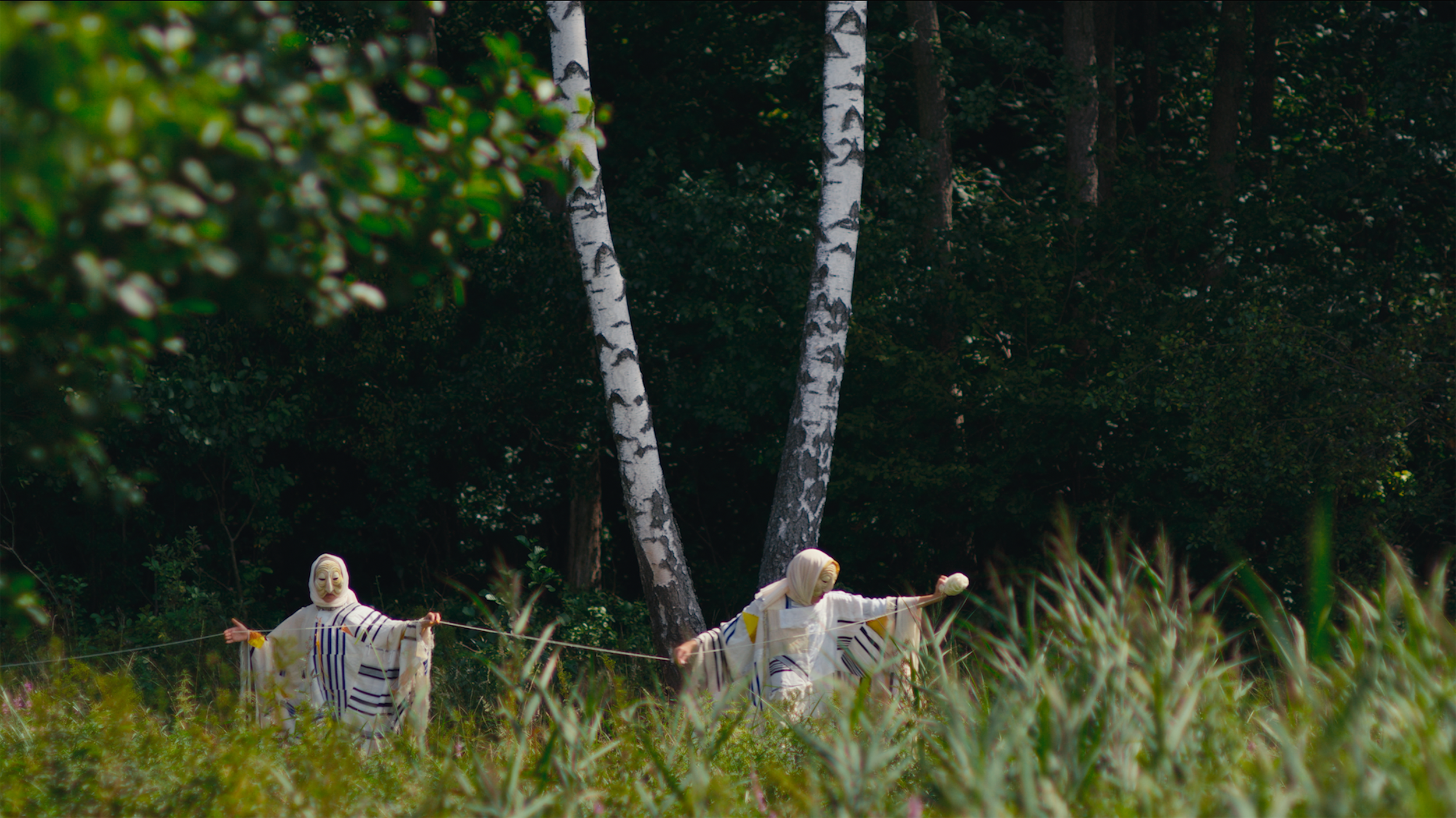
Hereland Collective, A Grenets-Mayse | A Border-Story, film still, 2026
The artwork was co-produced by Hereland Collective and commissioned by the POLIN Museum in Warsaw, where it premiered November 5–30, 2026.
Hereland Collective is an international cohort of Jewish artists, activists, and researchers working to reforest and revitalize the Yiddish imagination. The collective brings together Julie Weitz, Nessa Norich, Lu Coy, and Daniel Voskoboynik. Together, they explore questions of borders, ancestral healing, ritual, and memory through archival research and multidisciplinary practice.
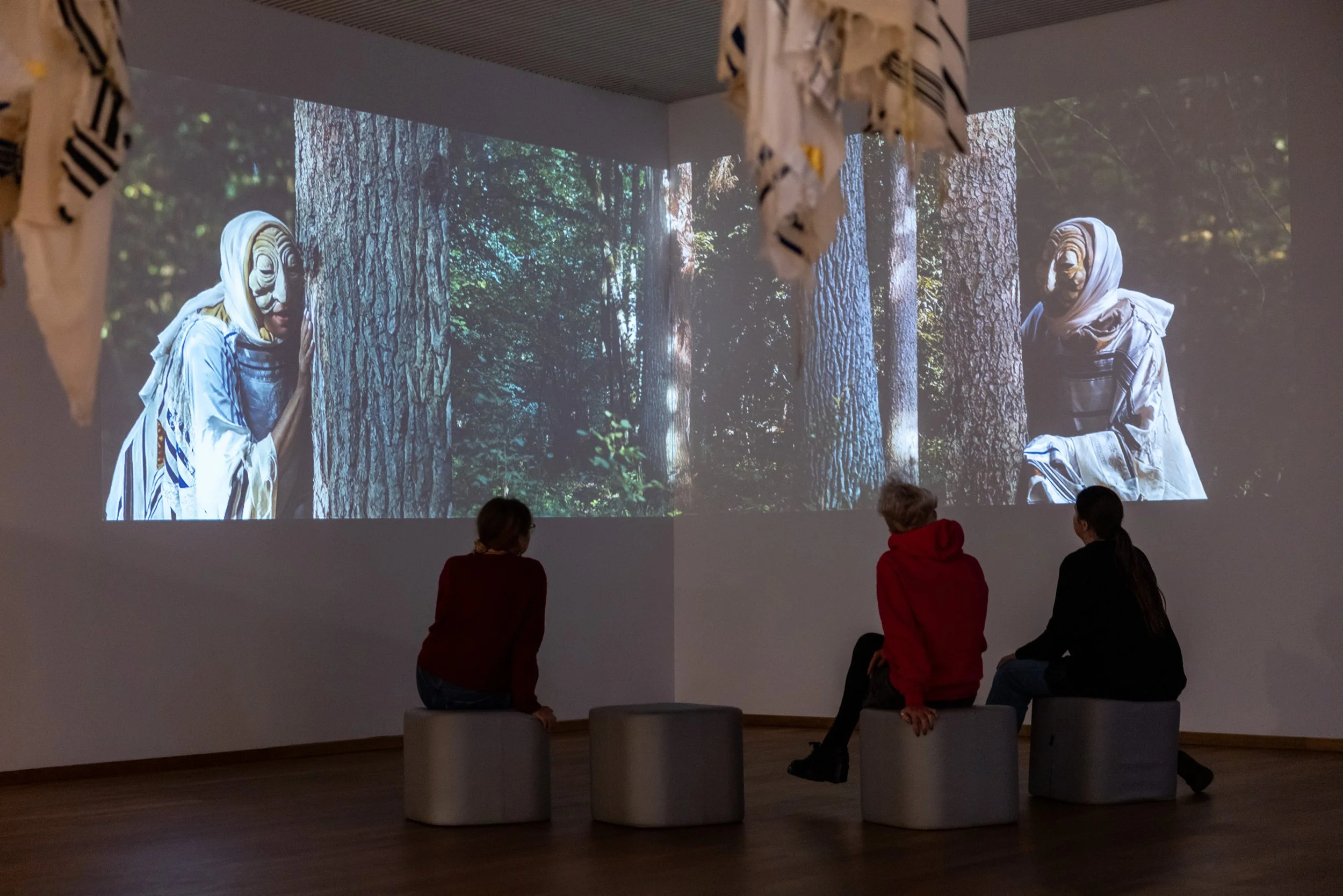
Hereland Collective, A Grenets-Mayse | A Border-Story, Installation view at the POLIN Museum in Warsaw, Poland, 2026 (photo credit M. Jaźwiecki/ POLIN)